
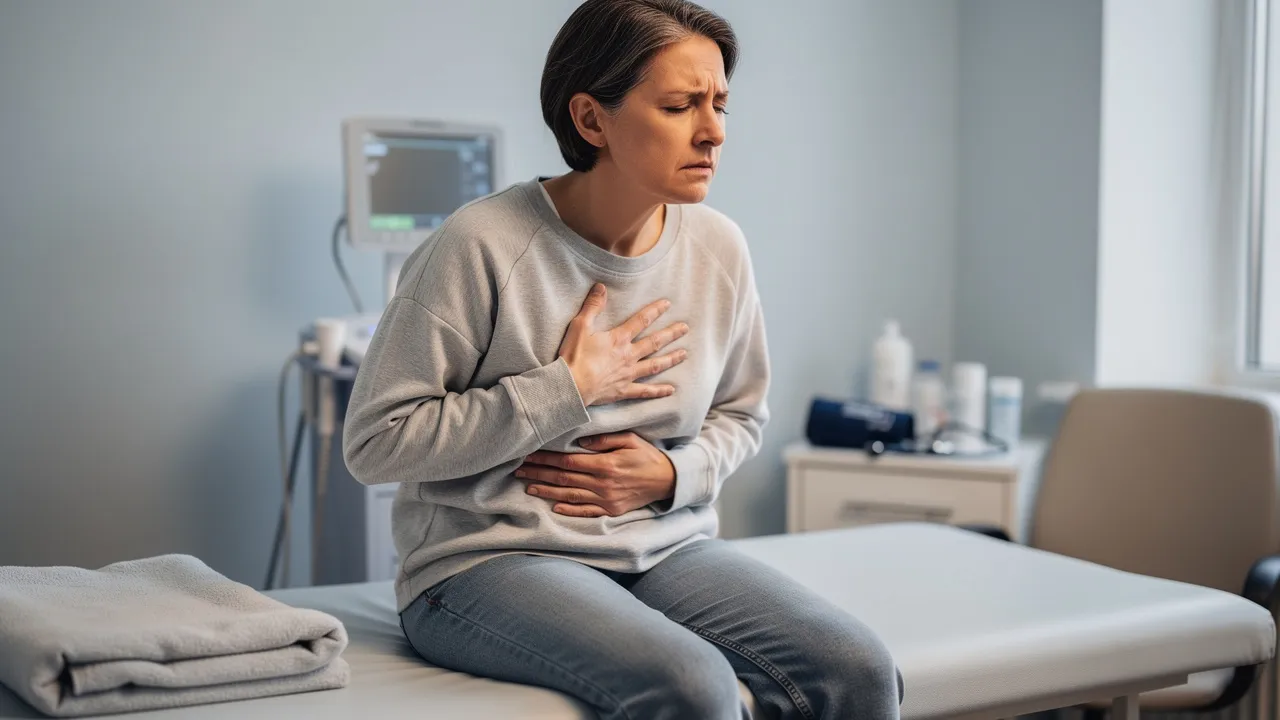
Begin with an appointment-ready symptom account
Anxiety-like physical sensations can appear even when you do not consciously feel anxious. Your heart may race, your muscles may tighten, or your stomach may feel unsettled while your thoughts seem calm. The body’s stress response is automatic and does not always come with an obvious emotional signal.
That mismatch is a starting point for investigation, not an explanation by itself. Anxiety can show up in the body as well as in thoughts and feelings, but a physical sensation alone does not establish anxiety or any other diagnosis. A useful first step is to describe the sensation clearly enough for a qualified professional to consider it alongside its timing, context, and effect on your life.
Treat the mismatch as a signal to investigate rather than an answer. Start by identifying what your body is reporting, then add context over time: when the sensation appears, what changes around it, and how much it affects your life. That approach gives you a more useful account to discuss with a qualified professional without forcing every symptom into an anxiety explanation.
Recognize the body’s possible anxiety signals
Physical anxiety symptoms can affect several parts of your body. Possible signals include:
- A racing or pounding heart
- Shortness of breath or faster breathing
- Headaches, dizziness, or lightheadedness
- Stomach upset, nausea, or other digestive discomfort
- Muscle tension, trembling, or tight shoulders and jaw
- Fatigue or difficulty settling down to sleep
- Sweating, chills, tingling, or changes in temperature
- Chest tightness or discomfort
These sensations can feel physical rather than emotional. You might notice a clenched jaw before you recognize stress, or fatigue before you connect it with a prolonged period of strain. The exact experience varies from person to person.
Anxiety does not require a panic attack to produce physical symptoms. Generalized anxiety, chronic stress, and low-level ongoing worry can contribute to headaches, muscle tension, fatigue, digestive issues, or other bodily sensations without a dramatic episode. Physical symptoms may linger without clear emotional triggers, especially with chronic stress or a diagnosed anxiety disorder.
A symptom can therefore be real and disruptive without telling you exactly why it is happening. Notice the experience without turning it into a label.

Keep possible causes as questions
Keep possible explanations as questions for an appointment rather than conclusions in your notes. You might record whether the pattern occurred during sustained stress, after poor sleep, alongside a difficulty identifying an emotion, after a medication change, or with another physical circumstance such as caffeine, food, illness, pain, or exercise. Other physical or mental-health factors can produce similar experiences.
These possibilities can overlap, and none establishes a diagnosis. Medication side effects can cause anxiety-like symptoms, while other sources of stress may contribute to them. The purpose of recording these details is to show a qualified professional what was happening around the symptom, not to decide which explanation is correct before an evaluation.
Stress can also feel ordinary when it has been present for a long time. A demanding work period, ongoing caregiving, relationship strain, poor sleep, or another sustained pressure may affect your body even when you do not describe yourself as anxious. Anxiety symptoms are symptoms of stress, so sources of stress other than consciously felt anxiety may contribute to them.
The useful question is not only, “Do I feel anxious?” Ask what else has been happening in your body, routines, health, and environment. Keep the answer provisional until a qualified professional can consider the full pattern.

Organize your symptom notes in three passes.
Anxiety-like symptoms without a conscious feeling of anxiety call for a usable record, not a quick conclusion. Build the note in three passes:
- Describe the signal. Use plain language for what you felt or observed instead of assigning the word anxiety immediately.
- Add the surrounding details. Include timing, duration, sleep, stress, physical circumstances, medications or substances, and the effect on your day.
- Separate description from urgency. Do not automatically blame new, sudden, severe, or unexplained symptoms on anxiety. Shortness of breath, chest discomfort, and a racing heartbeat can have causes other than anxiety, including serious heart, lung, or rhythm conditions.
The finished note is information to discuss with a qualified professional, not a diagnosis or a substitute for evaluation.
An estimated 19.1% of U.S. adults experienced an anxiety disorder during the past year, and roughly 31.1% will experience one at some point in their lifetime. Those population estimates do not determine what your symptoms mean. A diagnosis requires an assessment of your symptoms, context, impairment, and possible alternative explanations.
For example, a diagnosis of generalized anxiety disorder requires difficulty controlling worry on most days for at least 6 months and at least three symptoms such as feeling restless or on edge, fatigue, trouble concentrating, irritability, muscle tension, or problems with sleep. A physical sensation without that broader clinical picture does not by itself establish generalized anxiety disorder.

Turn observations into an appointment brief
A useful symptom brief describes what happened without assigning a diagnosis. Its purpose is to give a qualified professional a clear account that can be considered alongside your health history, medications, and daily-life impact. A brief record can include the following:
- The sensation: Use ordinary words for what you noticed, such as pounding in your chest, tight muscles, nausea, dizziness, tingling, fatigue, a breathing change, or another specific experience. If the sensation changed, describe the sequence rather than choosing one label for the whole episode.
- The beginning and course: Record when it began, how long it lasted, whether it came in waves, and whether it appeared during rest, activity, work, sleep, or a transition. Note whether it has happened once, repeatedly, or for a longer period.
- Intensity and effect: Describe how strong it felt and whether it interrupted concentration, movement, sleep, responsibilities, or relationships. Functional effect helps show what the symptom is changing in your day without claiming why it is happening.
- Physical setting: Note whether it occurred with exercise, illness, pain, a change in breathing, or another physical circumstance. A symptom that occurs during a calm moment is still worth describing, and a symptom that follows stress still does not establish anxiety as its cause.
- Sleep and routine: Record recent sleep, food, caffeine, substances, and other routine changes. These details provide context for the conversation rather than serving as a self-diagnosis.
- Medication and health information: Note medication changes and any relevant health concern you already know about. A healthcare provider may ask about your medical history, medications, and family history when evaluating anxiety symptoms, so gathering those questions in advance can make the appointment more focused.
- Thoughts and feelings: Record what you noticed mentally, including whether you felt worried, calm, detached, irritable, focused, or unable to identify an emotion. Include whether the sensation appeared with worry, stress, or panic, or without an obvious emotional trigger.
- What happened next: Describe what you tried, how long the effect lasted, and whether you have already had a medical evaluation. Relief after breathing or grounding can be useful information about the experience, but it does not confirm that anxiety caused the symptom.
- Questions for the appointment: Write down what you want clarified, such as whether the pattern warrants medical evaluation, what other explanations should be considered, and whether mental-health support fits the effect on your daily life.
The record does not need to be perfect or continuous. Bring the account to a qualified professional and treat it as information for discussion, not as proof of anxiety, OCD, or another condition.
Your body may react during a specific stressful moment or remain activated for a longer period, and the experience can vary from person to person. Anxiety levels can rise and fall in response to stress, thoughts, physical sensations, sleep, and other factors even when nothing obvious has changed.
Look for patterns without treating them as proof. A symptom that appears after poor sleep may still have more than one possible explanation. A symptom that appears during calm moments may still deserve attention. Bring the record to a qualified professional so the pattern can be considered alongside your health history and daily-life impact.
Use uncertainty to choose the next question
Palpitations show why a symptom record should guide a question rather than settle a cause. Anxiety-related palpitations can feel similar to heart rhythm disorders, and cardiac arrhythmias may occur without emotional triggers. A racing heart, tense muscles, stomach discomfort, sweating, dizziness, or changes in breathing can occur with anxiety, but these symptoms do not by themselves confirm anxiety because they can have other causes.
Use the record to identify what needs clarification: whether the sensation is new or familiar, whether it persists or worsens, whether it affects ordinary activities, and whether it occurs with exercise, illness, medication changes, caffeine, poor sleep, or another physical context. Also note whether it occurs alongside worry, stress, or panic, or without an emotional trigger. When symptoms persist without a clear physical explanation, anxiety is worth considering, but explanations such as dehydration, caffeine, or food can sometimes be accurate. The point is to bring these distinctions to a qualified professional rather than use a pattern as a diagnosis.
Use supportive steps while you observe
Supportive steps may help you stay grounded while you observe the pattern. They are not tests that can tell you whether anxiety caused the symptom.
- Try slow, deep breathing, which may help calm the body’s fight-or-flight response.
- Try the 5-4-3-2-1 grounding exercise, which may help you feel better if anxiety is contributing.
- Use mindfulness or meditation to anchor your attention in the present and decrease stress signals in the body.
- Keep consistent sleep-wake times when possible, because sleep deprivation can amplify physical symptoms and consistent timing may ease some complaints.
- Reduce the pressure to explain the sensation immediately. Write down what happened and return to the decision about evaluation.
Choose a quiet, manageable approach rather than stacking many techniques together during a frightening episode.
Temporary relief does not prove that anxiety was the cause. Continue to use the symptom’s severity, persistence, change, and effect on your life to decide whether you need qualified evaluation.

Match the record to qualified evaluation
Seek immediate qualified medical help for radiating chest pain, an intense headache that strikes out of nowhere, or stomach pain accompanied by a fever.
Persistent or severe physical symptoms warrant evaluation by a healthcare provider. For chest pain, seek medical evaluation to check your heart rather than assuming anxiety is the cause. The symptom brief can accompany that evaluation and can also help explain what changed, how long the experience lasted, and what effect it had.
Mental-health support may fit when worry, avoidance, compulsive behavior, physical activation, or uncertainty is affecting your daily life. Evaluating anxiety requires considering other explanations and co-occurring conditions; screening and monitoring tools can help clinicians assess symptoms and track treatment response.
A clinician assesses generalized anxiety disorder using criteria that include excessive worry more days than not for at least 6 months, difficulty controlling it, three or more associated symptoms in adults, and significant distress or impairment. The symptoms must not be better explained by another cause. You do not need to determine whether you meet those criteria before discussing your experience with a mental-health professional.
Bring the brief to adult anxiety or OCD therapy in Denver
The Emerald Couch works exclusively with adult clients and specializes in treating trauma and anxiety in adults. The Emerald Couch offers psychotherapy services in Denver for adults who want to bring questions about anxiety-related patterns, OCD symptoms, or their effect on daily life.
Therapy is a mental-health option, not a substitute for medical evaluation of persistent, severe, or unexplained physical symptoms. After appropriate medical concerns have been addressed, a conversation with The Emerald Couch can provide space to explore thoughts, feelings, behaviors, and emotional or physical responses without treating a symptom record as a diagnosis.
We offer both face-to-face counseling and telehealth therapy. At your first visit, we conduct a thorough intake session to gather information and assess your needs. Bring the symptom account you prepared, including what you noticed physically, what was happening around it, what you tried, and how the pattern affected your day.
We provide therapy for trauma, anxiety, including OCD and phobias, and depression. We also provide therapy for individuals with OCD. Those areas may make The Emerald Couch relevant when your next question is how anxiety or OCD symptoms fit into your wider experience, while a qualified professional can help determine what support is appropriate.
Book the next supported step
Your next step depends on urgency, persistence, and daily-life impact. Seek immediate qualified help for emergency warning signs, contact a medical professional for physical symptoms that are new, severe, persistent, worsening, or concerning, and bring a symptom record to mental-health support when anxiety, OCD, or worry is affecting your life. A qualified professional can help decide whether anxiety or OCD therapy fits your situation after medical concerns receive appropriate attention.
Questions to ask before seeking help for anxiety-like symptoms
Can anxiety symptoms occur without a panic attack?
Yes. Generalized anxiety, chronic stress, or ongoing low-level worry may contribute to physical symptoms without a dramatic panic episode. Headaches, muscle tension, fatigue, and digestive discomfort can occur this way, but these symptoms do not establish anxiety as the cause.
Can physical symptoms alone confirm generalized anxiety disorder?
No. A clinician assesses generalized anxiety disorder using the broader pattern, including difficult-to-control worry on most days for at least 6 months, at least three associated symptoms in adults, significant distress or impairment, and no better explanation from another cause. Physical sensations alone are not enough for a diagnosis.
Does feeling better after breathing or grounding prove that anxiety caused the symptoms?
No. Slow breathing, grounding, or mindfulness may reduce distress when anxiety contributes, but temporary relief does not rule out a physical cause or confirm an anxiety diagnosis. Continue to consider symptoms that are new, severe, persistent, worsening, or concerning.
What should I bring to a medical or therapy appointment for unexplained symptoms?
Bring a brief record of the sensation, when it began, how long it lasted, its intensity, what you were doing, sleep, food, caffeine, substances, medications or medication changes, illness, stress, and its effect on daily life. Include whether it occurred with worry, calm, or no clear emotional trigger. This information can help a qualified professional evaluate possible explanations without treating your notes as a diagnosis.
Sources
- Physical Anxiety Symptoms and How to Cope - LifeStance Health - lifestance.com
- Can You Have Physical Anxiety Symptoms Without Feeling Anxious? - sereniumwellness.com
- Anxiety Symptom Tracker Template | Clarity DTX - claritydtx.com, 2026-03-18
- Anxiety Or Medical Emergency? 5 Keys Signs To Know - infocusfirst.com
- Diagnosis and Management of Generalized Anxiety Disorder and Panic Disorder in Adults - aafp.org
- Generalized Anxiety Disorder DSM-V Diagnostic Criteria for 300.02 (F41.1 ... - ce.icep.wisc.edu
- Why Do I Have Anxiety Symptoms When I'm Not Feeling Anxious? - anxietycentre.com
- Shortness of Breath and Chest Discomfort: Anxiety or Medical Emergency? - medcoer.com
- Physical Symptoms of Anxiety: When to Seek Support - reliefmh.com
- Does Anxiety Come in Waves? Why It Happens and What Helps - avenapsych.com
- Generalized Anxiety Disorder: What You Need to Know - nimh.nih.gov