
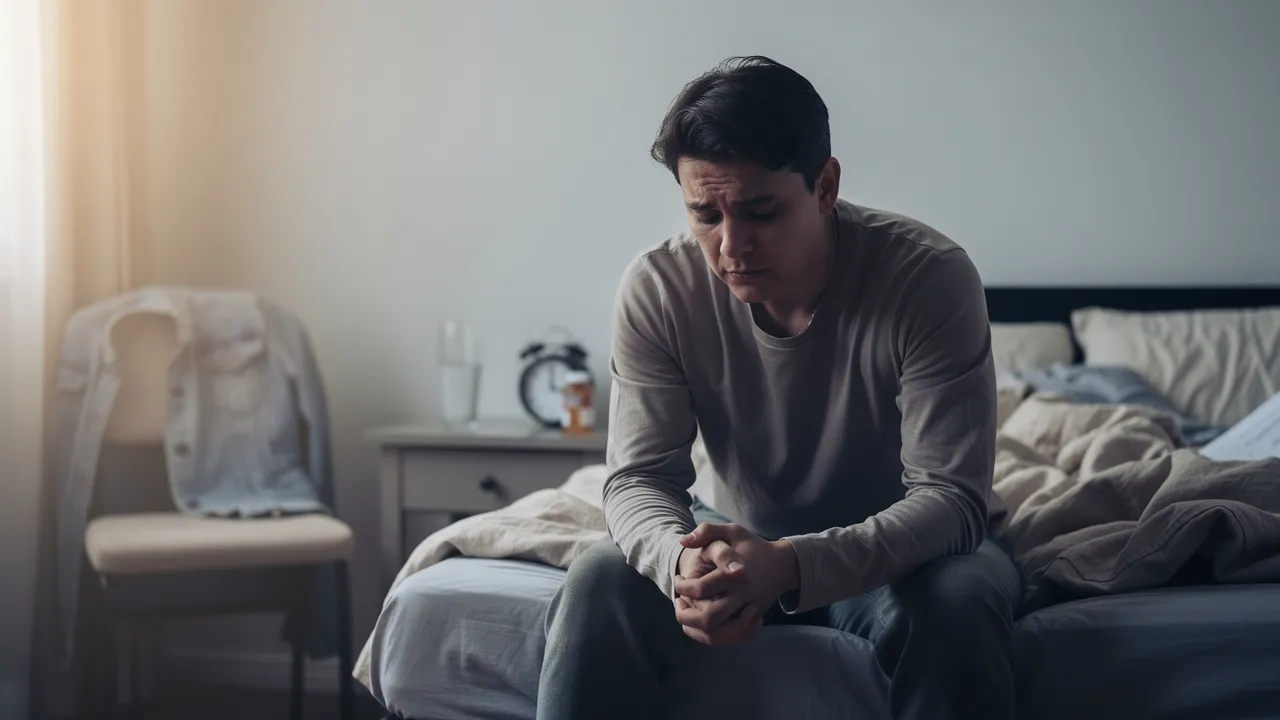
Why anxiety can feel like it takes over
Anxiety is your body's reaction to stress, and it can occur even if there is no current threat. That helps explain why your body may stay alert after an argument has ended, why your thoughts may keep scanning for danger, or why an ordinary task can suddenly feel difficult. The reaction is real even when the threat is not immediate.
Stress generally responds to an external cause and goes away once the situation is resolved. Anxiety usually involves a persistent feeling of apprehension or dread that does not go away and interferes with how you live your life.
Anxiety can affect your emotions, body, behavior, work, relationships, and daily functioning. You may notice the disruption in several places at once:
- Thoughts and emotions: persistent worry, dread, rumination, difficulty concentrating, low mood, or a sense that you cannot relax.
- Body sensations: a churning stomach, dizziness, trembling, faster breathing, heartbeat changes, sweating, nausea, muscle tension, or sleep problems.
- Behavior: avoidance, repeated reassurance-seeking, or delaying an ordinary activity because it feels impossible to start.
- Daily life: difficulty keeping up with responsibilities, relationships, work, or routine activities.
Anxiety may make ordinary activities feel impossible and may lead you to delay or avoid them. Anxiety disorder symptoms can interfere with daily life and routine activities; in severe cases, anxiety might lead you to avoid social encounters or refuse to leave home. That pattern deserves attention, but it does not tell you which diagnosis, if any, applies.
The effect of anxiety is not measured only by how intense a feeling seems in one moment. The more useful question is what the pattern changes: whether you stop doing ordinary tasks, lose sleep, struggle to concentrate, withdraw from relationships, or find work and responsibilities harder to manage. Anxiety can therefore feel disruptive even when you cannot point to one dramatic event.
You can take that impact seriously without turning it into a diagnosis. Naming what anxiety changes in your day gives you a clearer starting point for self-management, assessment, or urgent help.
What the words may - and may not - tell you
The term “anxiety attack” is often used to describe a period of intense anxiety, fear, or discomfort, but it is not a formal diagnosis in the current edition of the DSM-5. Similar anxiety symptoms can have different possible causes, so the words you use to describe an experience cannot establish a diagnosis by themselves.
That distinction matters because a familiar label can make a complicated experience seem settled before you have looked at its pattern, duration, physical symptoms, and effect on daily life.
Panic attacks are characterized by a sudden, intense surge that peaks within minutes and often subsides quickly. An informal anxiety-attack description may refer to anxiety that builds gradually or comes on abruptly, is generally less intense than a panic attack, and lasts for an extended period, even hours.
“Panic attack” and “anxiety attack” are also often used interchangeably in everyday conversation, and the experiences can share many symptoms. The terminology is therefore less useful than describing what happened: how quickly it began, what you felt in your body, what you avoided, how long it lasted, and what changed afterward. Bring that description to a qualified professional rather than trying to settle the label yourself.
A useful description can stay concrete. You might note whether the experience arrived suddenly or built over time, whether fear or worry was strongest, which physical sensations appeared, and whether the episode changed what you did next. That information is more helpful for a clinical conversation than trying to decide whether one informal term is the correct label.
Notice the pattern without turning it into a verdict
A persistent anxiety pattern may need attention when worry is difficult to control, appears across situations, produces repeated physical symptoms, or disrupts sleep and daily responsibilities. Generalized anxiety disorder includes persistent and excessive anxiety about activities or events, including ordinary routine issues; the worry is difficult to control, affects how you feel physically, and may interfere with daily life.
The useful question is not whether you can recognize yourself in a symptom list. The useful question is whether the pattern is lasting, hard to control, and changing what you can do.
Generalized anxiety disorder is described as excessive anxiety and uncontrollable worry, with symptoms such as restlessness, fatigue, difficulty concentrating, irritability, muscle tension, and sleep disturbance occurring more days than not for the past 6 months. GAD may involve intrusive anxiety about ordinary day-to-day concerns across areas such as finances, work, or health, and the associated symptoms may impair social, occupational, or other daily functioning.
The reported median age of onset for GAD is 30 years, while age of onset is variable. That figure describes the condition's reported median, not a timetable for your experience. A symptom pattern can signal that you need support without proving that GAD is the cause.
Anxiety that will not go away and affects your life may have different possible causes. Persistent worry, difficulty controlling anxious thoughts, repeated physical symptoms, or worsening sleep and daily responsibilities may be signs that anxiety needs attention, but symptoms alone do not establish a diagnosis.
You can use the pattern as a decision point instead of a verdict. If the experience is occasional and manageable, a small self-management step may be a reasonable place to begin. If it keeps returning, spreads across situations, or narrows your life, qualified assessment becomes more relevant.

Choose one small response for the next anxious moment
A small response gives you something concrete to do without requiring you to solve every part of your anxiety at once. When you first start to panic, focus on breathing slowly to help you feel calmer. These are options to try, not a test of whether you are managing anxiety correctly.
Keep the task narrow. Choose one action you can begin now rather than building a long list that becomes another source of pressure.
Choose one manageable action first:
- Change your physical state: Try slow breathing, a short walk, stretching, relaxation, or another moderate activity. For GAD self-care, even a 15-minute walk can help.
- Support your baseline: Keep a regular daily schedule, get enough sleep, eat regular balanced meals, and get out of the house when you can.
- Track the pattern: Write down when symptoms occur, what you were doing, and how intense they felt. You can share that record with a healthcare provider.
- Tell someone: You may find it helpful to tell a trusted friend, family member, or support person what you are experiencing.
- Reduce common aggravators: Consider limiting alcohol and caffeine, which may aggravate anxiety or trigger panic attacks.
Try setting small targets that you can easily achieve rather than doing everything at once. If one option does not help enough, that is information about the next conversation you may need; it is not a verdict about your ability to improve.
A practical first step might be as specific as taking a short walk, writing one journal entry, eating your next regular meal, or telling one trusted person that anxiety has been difficult. Specific actions are easier to assess afterward than a vague goal to “feel better.” Notice what happened, what remained difficult, and whether the pattern continued.
Know when a qualified assessment is the next step
A clinical anxiety assessment considers how anxiety affects your thoughts, emotions, physical health, relationships, and daily functioning rather than relying on a single symptom or questionnaire. A psychiatric evaluation generally begins with a conversation about when your anxiety started, how frequently it occurs, what situations make it worse, and how it affects everyday life.
GAD is diagnosed clinically; no laboratory test, imaging study, or other diagnostic procedure confirms the diagnosis. The GAD-7 is a 7-item screening scale commonly used to screen for anxiety and assess symptom severity. A score cut-off of 10 on the GAD-7 is generally used for further evaluation of GAD, but a positive anxiety screen does not establish a diagnosis. Further clinical evaluation is needed to assess the anxiety, associated symptoms, functional impairment, and diagnostic criteria.
You can prepare for an assessment by bringing a simple account of when symptoms occur, what situations make them worse, how often they appear, and what they prevent you from doing. Include changes in sleep, concentration, physical sensations, relationships, and responsibilities. A journal is not a diagnostic tool, but it can help you describe the pattern more clearly to a healthcare provider.
What therapy can help you work on
Psychotherapy involves working with a therapist to reduce anxiety symptoms and can be an effective treatment for anxiety. The two main treatments for anxiety disorders are psychotherapy and medications; you may benefit most from a combination, and it may take some trial and error to discover which treatments work for you.
CBT is generally short-term and focuses on teaching specific skills to improve symptoms and gradually return to activities you have avoided because of anxiety. Exposure therapy is a form of CBT in which you are gradually exposed to a feared situation or object, learning to become less sensitive over time. This approach has been found particularly effective for OCD and phobias.
CBT benefits are usually seen in 12 to 16 weeks, depending on the individual, and repeated practice of the skills is needed to see improvement. Treatment results vary: some people feel better within weeks, while others need more time. Treatment may take longer when you have more than one anxiety disorder or another condition.
Those timeframes are general descriptions, not a promise about your progress. A useful therapy conversation focuses on what you want to change, what anxiety has restricted, and how you will recognize movement toward your goals. Progress may be discussed in terms of the activities you can approach, the patterns you understand more clearly, or the daily responsibilities you can manage with less disruption.
The Emerald Couch begins with a thorough intake session to gather information and assess client needs. We co-create goals with clients and identify what success looks like for them. We also provide education, explain our understanding of your situation, and customize scientifically backed treatments.
That process gives you a way to discuss the specific pattern rather than arriving with a diagnosis already decided. You can describe the worries, physical symptoms, avoided activities, and daily effects that led you to seek support.
The Emerald Couch provides therapy for trauma, anxiety, including OCD and phobias, and depression. We specialize in OCD treatment. We offer both face-to-face counseling and telehealth therapy for adults in Denver. Our services are for adult clients, not younger children.
For an adult dealing with anxiety, panic symptoms, or OCD, the relevant question is whether the service and treatment conversation fit your concerns. Therapy is one possible next step alongside self-management or other qualified care, depending on the assessment.
Plan for the financial conversation
The Emerald Couch's listed financial details are specific to our services, not a market-average cost for anxiety therapy. We are in-network with Aetna and Lyra. Our out-of-network rate is $220 a session.
The $220 figure measures one out-of-network therapy session at The Emerald Couch. Coverage through an in-network plan and the out-of-network rate are different ways the cost of care may be handled, so the route that applies to you affects the financial conversation.
The main cost questions are practical: whether your coverage is through Aetna or Lyra, whether the out-of-network rate applies, and whether a $220 session is within the amount you are prepared to discuss. These details describe The Emerald Couch's stated options; they are not a general price for anxiety therapy in Denver.
Cost is one part of choosing care. You can consider it alongside the type of support you want, whether face-to-face or telehealth therapy suits you, and whether the first conversation addresses the concerns that brought you there.
When anxiety cannot wait
Severe anxiety requires immediate qualified help when it becomes physically and mentally debilitating or makes normal functioning impossible. Seek immediate qualified evaluation if anxiety leaves you unable to bathe, eat, leave the house, or perform other simple tasks.
Anxiety or panic symptoms can have a medical or mental-health cause, so qualified clinicians may assess for both. Emergency clinicians may treat the immediate crisis and refer you to an appropriate medical or mental-health specialist.
New or worsening self-harm urges or actions also require immediate qualified help for safety.
Do not wait for a routine therapy conversation when immediate safety is at risk. Do not rely on an online label to explain chest pain, breathing difficulty, or a rapidly worsening crisis. Use the urgent route first.
Immediate care has a different purpose from routine anxiety support. The first task is to address the crisis and assess whether a medical condition, a mental-health condition, or both may be contributing. Seek qualified help promptly when the symptoms are severe, rapidly worsening, or connected to immediate safety concerns.

Describe the experience before choosing a label
“Anxiety sucks” describes distress, not a diagnosis. A useful description of one episode includes what was happening in your thoughts and emotions, what you noticed in your body, what you did or avoided, and how daily life was affected. You do not need to choose a diagnostic label before sharing that description with a qualified mental-health professional.
The Emerald Couch works exclusively with adult clients in Denver. We work with adults who want to discuss anxiety or OCD treatment and whether our approach fits their needs.
If the experience raises an immediate safety concern, contact a qualified professional or the responsible authority promptly. A qualified mental-health professional can help assess what support may fit.
Sources
- Anxiety disorders - Diagnosis and treatment - mayoclinic.org, 2025-07-29
- Diagnosis and Management of Generalized Anxiety Disorder and Panic Disorder in Adults - aafp.org
- Anxiety disorders - Symptoms and causes - mayoclinic.org, 2025-07-29
- Anxiety types and self-care tips - mayoclinichealthsystem.org, 2022-05-16
- Psychotherapeutic Treatments for Generalized Anxiety Disorder: Cognitive and Behavioral Therapies, Enhancement Strategies, and Emerging Efforts - pmc.ncbi.nlm.nih.gov
- How Is Anxiety Evaluated? Understanding What Your Symptoms Mean and When to Seek Help | Telepsychiatry & Medication Management | Serenity Health Telepsychiatry, LLC - serenitytp.com
- Get help with anxiety, fear or panic - nhs.uk
- Anxiety Disorders - nimh.nih.gov
- I’m So Stressed Out! Fact Sheet - nimh.nih.gov
- What An Anxiety Attack Feels Like & What to Do | Hackensack Meridian Health - hackensackmeridianhealth.org
- Tips and Strategies to Manage Anxiety and Stress - adaa.org
- Effective Anxiety and Depression Treatments | Explore Therapy Options & Find Support - adaa.org
- 10 Tips to Help Reduce Anxiety Attack Symptoms | Guidelight - guidelighthealth.com
- Generalized Anxiety Disorder (GAD) Workup: Approach Considerations, Screening - emedicine.medscape.com
- How to deal with panic attacks - nhsinform.scot
- Generalized anxiety disorder - self-care: MedlinePlus Medical Encyclopedia - medlineplus.gov
- How To Recognize Anxiety Symptoms Early Before They Escalate | Daylight Wellness Group - daylightwellnessgroup.com
- Clinical Practice Guidelines for Assessment and Management of Anxiety and Panic Disorders in Emergency Setting - pmc.ncbi.nlm.nih.gov
- When To Get Help During A Severe Anxiety Attack | Urgent Psych - urgentpsych.org
- 5 Reasons Why Anxiety Sucks - graymatterhealth.com
- Anxiety signs and symptoms | Mental health problems | Mind - mind.org.uk